Bridging Medicine and Law to Protect Accident Victims with Hidden Brain Injuries
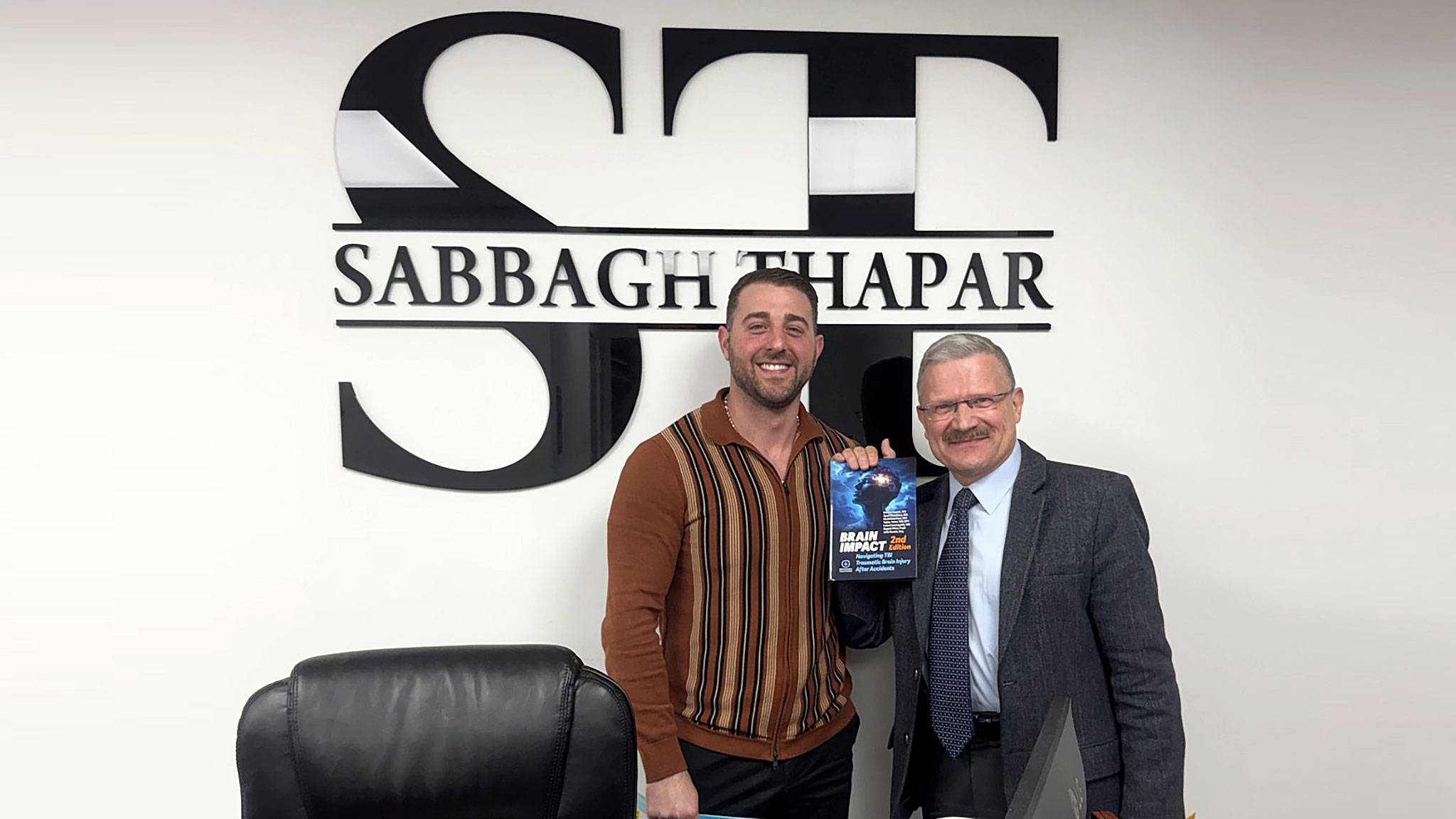
CLIFTON, NJ — Dr. Dariusz Nasiek, MD, of Allied Neurology & Interventional Pain Practice (ANIPP), recently delivered a professional lecture on traumatic brain injury (TBI) to the legal team at Sabbagh Thapar in Clifton, New Jersey.
The presentation, titled “Together We Will Eliminate Untreated Traumatic Brain Injury,” addressed one of the most critical — and most overlooked — issues facing accident victims and the attorneys who represent them: the alarmingly high rate of undiagnosed brain injury following everyday accidents.
The Diagnostic Gap That Changes Cases and Lives
Dr. Nasiek — triple board-certified in anesthesiology, pain medicine, and interventional pain management, with over 35 years of clinical experience — highlighted how even mild TBIs and concussions frequently go undiagnosed following motor vehicle accidents, workplace injuries, slip-and-fall incidents, and railroad accidents.
Research shows that up to 50% of mild TBI cases are initially missed in emergency departments — because standard CT scans appear normal in the vast majority of concussion cases. Patients are discharged with reassurance, while symptoms like persistent headaches, memory problems, cognitive fog, mood changes, dizziness, fatigue, and sleep disturbances emerge over the following days, weeks, or months — often without anyone connecting them to the original trauma.
For personal injury and workers’ compensation attorneys, this diagnostic gap has direct implications: clients with undocumented brain injuries receive less care, weaker case support, and lower compensation than those whose TBI is properly identified and objectively documented from the start.
Advanced Diagnostics That Produce Court-Admissible Evidence
Dr. Nasiek outlined ANIPP’s comprehensive diagnostic protocol, which goes far beyond what standard ER or primary care settings can offer:
- Diffusion Tensor Imaging (DTI MRI) — a specialized neuroimaging technique that visualizes white-matter tract integrity and detects axonal damage invisible to conventional MRI or CT. DTI findings provide objective, quantifiable evidence of brain injury, increasingly recognized in medicolegal proceedings.
- EEG, Video EEG, and Tele-EEG — electrodiagnostic brain studies performed under the direction of board-certified neurologist Dr. Rikki Racela, MD, measuring real-time electrical brain activity and detecting abnormalities that confirm functional impairment even when structural imaging appears normal.
- Neurocognitive and neuropsychological testing — standardized assessments that objectively measure the impact of brain injury on memory, attention, processing speed, and executive function, providing court-admissible documentation essential for case valuation and trial.
- Psychiatric and psychological evaluation — identifying emotional and behavioral consequences of TBI, including depression, anxiety, PTSD, and personality changes that significantly affect damage and quality-of-life claims.
Physician-Attorney Collaboration: Better Referrals, Stronger Cases, Better Outcomes
A central theme of the presentation was the critical importance of collaboration between medical providers and attorneys. Dr. Nasiek emphasized that when the legal community understands TBI — its subtle presentation, its long-term consequences, and the diagnostic tools that objectively document it — the outcomes for injured clients improve on every level: better medical referrals, stronger evidentiary support, more comprehensive treatment, and fairer compensation.
The interactive Q&A session that followed the lecture allowed attorneys at Sabbagh Thapar to explore real-world case scenarios, discuss evidentiary standards for TBI claims, and develop practical strategies for identifying potential brain injury in clients whose initial ER workup was negative.
“No Patient’s TBI Should Go Unrecognized”
“We are on a quest to eliminate undiagnosed and untreated traumatic brain injury,” said Dr. Nasiek, editor and co-author of Brain Impact: Navigating Traumatic Brain Injury After Accidents (2nd Edition, 2025). “By educating the legal community, standardizing screening protocols, and insisting on thorough neurologic and neurocognitive evaluation, we aim to ensure that no patient’s TBI goes unrecognized or unmanaged.”
About Allied Neurology & Interventional Pain Practice
ANIPP has operated as a recognized Center of Excellence for TBI evaluation and treatment since 2006, serving patients across New Jersey and New York after motor vehicle accidents, workplace injuries, slip-and-fall incidents, and railroad accidents.
Under the leadership of Dr. Dariusz Nasiek, MD, a board-certified neurologist specializing in TBI diagnosis, post-traumatic injuries, EEG, Video EEG, EMG, and comprehensive neurological evaluations, and Dr. Rikki Racela, MD, ANIPP provides end-to-end care from initial screening and advanced diagnostics through individualized treatment and detailed medicolegal documentation.
Dr. Nasiek is also the author of Your Health After a Workplace Accident and PRP — Platelet Rich Plasma: A New Paradigm for Regenerative Medicine.
Referring a Client for TBI Evaluation?
If you are an attorney, case manager, or medical professional and have a client or patient who was involved in an accident and reports headaches, memory problems, mood changes, difficulty concentrating, dizziness, or fatigue, these symptoms may indicate an undiagnosed traumatic brain injury. Early referral for comprehensive evaluation can change the trajectory of both the patient’s recovery and the strength of their case.
Contact ANIPP to schedule an evaluation or discuss a referral:
201-894-1313 | 973-773-7730
AlliedSpineInstitute.com | LeczeniePowypadkowe.com
Locations: Englewood, NJ | Garfield, NJ | East Orange, NJ | Elizabeth, NJ | Rego Park, NY | Washington Heights, NY
Dr. Dariusz Nasiek, MD — Triple Board-Certified: Anesthesiology · Pain Medicine · Interventional Pain Management
Dr. Rikki Racela, MD — Board-Certified Neurologist, Center of Excellence in TBI Treatment, Since 2006