
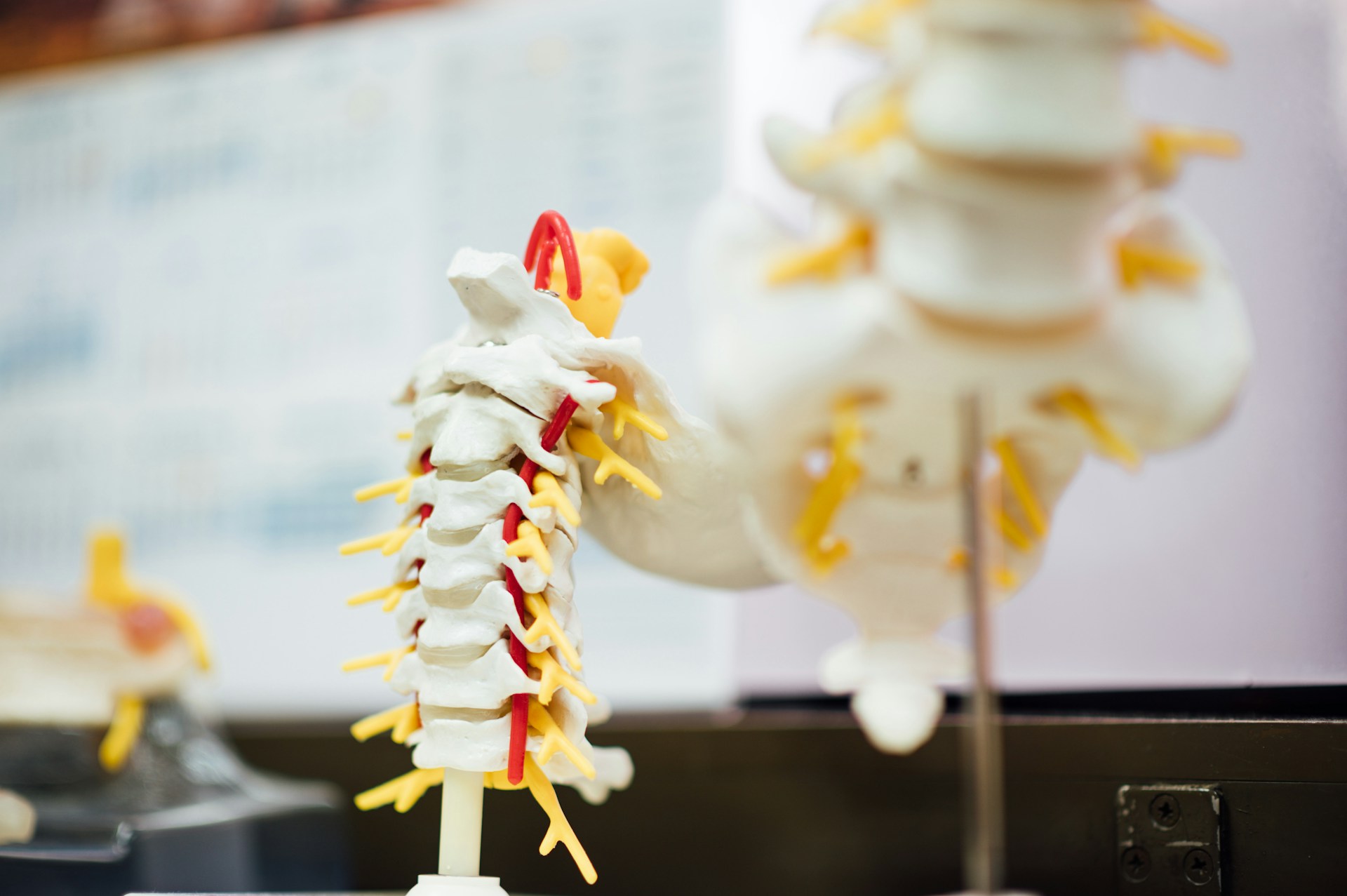
Middle back pain can be frustrating, limiting your movement and making daily tasks—like sitting, lifting, or twisting—difficult. The middle back (thoracic spine) is responsible for stability and posture, so when pain develops, it can signal muscle strain, posture issues, or even injury from a car accident or workplace incident. Understanding how to relieve middle back pain starts with identifying the underlying cause.
What causes middle back pain?
The thoracic spine is less flexible than the neck and lower back, but it can still develop pain from several conditions:
- Poor posture — slouching or hunching over a desk strains the mid-back muscles.
- Muscle or ligament strain — from lifting, twisting, or overuse.
- Myofascial pain — tight knots and trigger points between the shoulder blades.
- Pinched nerves — thoracic nerve compression can cause burning or radiating pain.
- Herniated discs — though less common in the mid-back, they can still occur.
- Car accidents or workplace injuries — trauma may cause hidden soft tissue or nerve damage.
- Scoliosis or spinal misalignment — can add pressure to muscles and joints.
Symptoms of middle back pain
You might experience:
- Aching, sharp, or burning pain in the mid-back
- Stiffness, especially after sitting for long periods
- Pain when twisting, bending, or lifting
- Radiating pain into the ribs or chest
- Muscle spasms or tightness between the shoulder blades
How to relieve middle back pain at home?
These at-home methods can offer quick relief for mild or early-stage pain:
- Heat therapy — relaxes tight muscles and improves circulation.
- Ice therapy — reduces inflammation after strain or injury.
- Gentle stretching — especially for the thoracic spine, chest, and shoulders.
- Foam rolling — releases muscle knots along the mid-back.
- Posture correction — sit upright with proper back support.
- Walking or light movement — reduces stiffness and improves mobility.
- Over-the-counter anti-inflammatory medications when appropriate.
While these strategies help reduce discomfort, they may not resolve deeper structural issues or injury-related causes.
When middle back pain is serious?
You should seek professional evaluation if your pain:
- Lasts more than 1–2 weeks
- Started after a car accident or workplace injury
- Radiates into the ribs, chest, or abdomen
- Includes numbness or tingling
- Worsens with movement or breathing
- Makes it hard to sleep or perform daily activities
Medical treatments for middle back pain
At Allied Neurology & Interventional Pain Practice, we provide advanced, non-surgical treatments to eliminate the root cause of mid-back pain. These include:
- Trigger point injections — relieve deep muscle knots and spasms.
- Thoracic nerve blocks — for immediate pain relief and diagnosis.
- Radiofrequency ablation — long-lasting relief for chronic nerve or joint pain.
- PRP (Platelet-Rich Plasma) therapy — promotes healing of injured soft tissues.
- Epidural injections — reduce inflammation around irritated nerves.
- Rehabilitation therapy — strengthens posture muscles and restores movement.
Middle back pain after an accident
Accidents often cause injuries that don’t show symptoms immediately. Muscle tears, joint irritation, or spinal damage in the mid-back can worsen over time if untreated. Early evaluation helps prevent chronic pain and ensures proper medical documentation for personal injury or workers’ compensation cases.
Expert help for middle back pain
At Allied Neurology & Interventional Pain Practice, Dr. Dariusz Nasiek, MD, has over 35 years of experience diagnosing and treating middle back pain caused by muscle tension, nerve issues, and accident-related injuries. His non-surgical, targeted treatments help patients return to a pain-free, active lifestyle.
Need relief from middle back pain? Call 201-894-1313 or schedule your consultation today for expert care.